Cunningham did me a favor really. I realize now how to use music to benefit my writing. Picking a tone is like picking the color of a certain day or feeling. Now something that seemed intrusive to my writing process can take part in getting some of those blasted words down onto some paper, or into the screen, for a change. As a musician myself I can only leap for joy at the joining of these two art forms, and I have to say, I've come away from it all with some new ideas.
Tuesday, April 28, 2009
Michael Cunningham Visits The University of Puget Sound
Friday, April 3, 2009
Sephia Day
I can't really describe what it was like, experiencing death among loved ones for the first time, finally grasping that my step-mother's family was mine too, had been all along, and being sad too. But that day I remember in sephia because it was like living in a memory. Because my emotions were polar opposites, black and white, like an old photograph. Then and now. Before and after. We were girls in white dresses and lace socks, we are grown women, independent, working, maybe in love, and confused because we are still young. And one day we'll be gone too. The sensation is too fresh to get now, but sephia describes it and makes a home of it for me.
In Loving Memory of Idella Cavit Banks (May 16, 1925 - March 19, 2009).
Tuesday, March 10, 2009
Hoshi Kashiwagi and American Autobiography
Today, memoirist Hoshi Kashiwagi spoke to my Genre: Nonfiction class about autobiography, family, secrets, and what it means to own your own story. But we can't really own our own stories can we? As I "write down my own bones" I find that every single one of them has touched or is attached deeply to someone else. While Dr. Kashiwagi talked about Japanese internment during the second World War, the useless feeling to which he succumbed while imprisoned, "no-no boys," half-owned half memories, and theatre art in a veritable jail, I thought about my mother, half siblings, our fathers, Alabama, and the Golden Gate Bridge. Can I morally tell my story when more than half of it belongs to someone else? Memoirists debate over the need to be true to their familial allegiances and there indescribable need to tell a true story, their story. Some have insurance to deal with the discrepancies, some take their chances, others have severed ties. There is no easy answer, no way to compromise desire with sometimes flimsy obligations. So I will try to write the truth. I will try not to hurt your feelings. I will try not to hurt my own feelings. But tell the truth, tell the truth.

In the spirit of autobiography, which I've been working with a lot of lately, I picked a neat prompt to motivate some writing. In a week or so I'll post my own response to the prompt. Please feel free to post your own response in a comment which I can put up if you like, or just share your experience in a comment if you decide to write something. (I found this prompt in the article "Writing the Memoir: A Practical Guide to the Craft, the Personal Challenges, the Ethical Dilemmas of Writing Your True Stories," by Judith Barrington.)
Pick a day or part of a day from your memory and assign it a color. Describe that time, returning to, and developing, the theme of color and showing the reader why you think of it as a "yellow day" or a "purple afternoon."
Remember to pick a strong memory...
Swimming in the American: A Memoir and Selected Writings
By Hoshi Kashiwagi
Labels:
Autobiography and Ethics,
Hoshi Kashiwagi,
Writing
Legally Own Your Work: How to Copyright Your Stuff
There are two ways to go about copyrighting your work: Go through the U.S. Government. There is always a fee if you do it this way. You can go to this site and check it out: http://www.copyright.gov/. Here you can find everything from long winded descriptions of legalities to hokey anime animations that break down the whole process for you. Doing it this way is expensive, especially if you have a lot of pieces that are not part of a larger collection.
There is a much simpler and cheaper way to go about this that will cost only as much as your work's weight in postage stamps. Mail the thing to yourself. Just make sure that it has a clear date stamped on the envelope. When you receive your present in the mail, don't open it. Keep it as proof that you have in fact copyrighted your work. You can mail novels, stories and poetry to yourself individually or together as a large collection. It's really up to you and what your own ideas are about how your work should be published. For instance, if you send a collection of short stories to yourself but a year later add two more stories to that collection to make a new edition, the new stories are not copyrighted. To be considered a part of the whole collection you would have to re-mail the collection to yourself with the new stories included. The new date stamp is the new copyright date. Of course, this information is heavily informal and should be researched again before you consider copyrighting. Here is an interesting site that debates the issue (because it is an issue): http://www.copyrightauthority.com/poor-mans-copyright. Copyrighting your work protects your work and makes sure that you lawfully receive credit whenever someone other than yourself publishes it. Which ever method you use, make sure you understand all of the laws associated with that method and above all, make sure you are comfortable with using that method for something you worked hard to create.
Monday, March 2, 2009
Billie Holiday's "Strange Fruit"
Strange Fruit
Southern trees bear strange fruit,
Blood on the leaves and blood at the root,
Black bodies swinging in the southern breeze,
Strange fruit hanging from the poplar trees.
Blood on the leaves and blood at the root,
Black bodies swinging in the southern breeze,
Strange fruit hanging from the poplar trees.
Pastoral scene of the gallant south,
The bulging eyes and the twisted mouth,
Scent of magnolias, sweet and fresh,
Then the sudden smell of burning flesh.
The bulging eyes and the twisted mouth,
Scent of magnolias, sweet and fresh,
Then the sudden smell of burning flesh.
Here is fruit for the crows to pluck,
For the rain to gather, for the wind to suck,
For the sun to rot, for the trees to drop,
Here is a strange and bitter crop.
For the rain to gather, for the wind to suck,
For the sun to rot, for the trees to drop,
Here is a strange and bitter crop.
Some things to think about:
What does Holiday do differently with her voice? Her face? What effect does it have on you as you watch her?
Why does Meeropol use the poplar tree as a vehicle to portray lynching?
What is significant about the scent of magnolias?
Billie Holiday (April 7, 1915 – July 17, 1959)
Abel Meeropol (February 10, 1903 - October 30, 1986)
Thanks for that awesome observation Ben.
Why does Meeropol use the poplar tree as a vehicle to portray lynching?
What is significant about the scent of magnolias?
Billie Holiday (April 7, 1915 – July 17, 1959)
Abel Meeropol (February 10, 1903 - October 30, 1986)
Thanks for that awesome observation Ben.
Labels:
Abel Meeropol,
Billie Holiday,
Jazz,
Lynching
Saturday, February 21, 2009
Two Good Watches for Black History Month
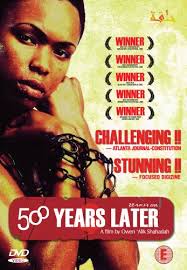
"The Color of Fear" is a dialogue project between eight American males - black, white, Asian, and Latino - specifically discussing racism in the United States. This documentary is not about black history or Black History Month but serves as a good follow up to "500 Years Later," which left me asking many more questions about race relations in the U.S.
This film addresses and asks questions such as:
What does it mean to be white vs. a person of color in the United States?
What does it mean to be American?
What is the definition of racism?
Is there a solution to contemporary racism?
The conversation between these men forces us to redefine racism as we know it and confront stereotypes that we all have about others and even ourselves. This is a must see for every American.
Below is a trailer to the film.
Wednesday, February 18, 2009
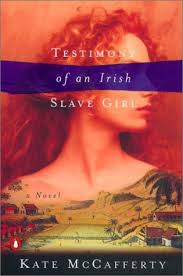
On Slave Narratives and Kate McCafferty's "Testimony of an Irish Slave Girl"
I just finished reading Kate McCafferty's Testimony of an Irish Slave Girl, a fictional slave narrative about an Irish child forced into slavery by her English overlords. After reading the autobiographical narratives Incidents in the Life of a Slave Girl by Harriet Jacobs and Narrative of the Life of Frederick Douglass by Frederick Douglass for two classes that I am currently taking, I thought it would be interesting to read a slave narrative from the seldom-studied point of view of a white European slave, captured, put on a ship, and forced into indentured servitude in much the same way as hundreds of thousands of Africans were. The crucial difference? The possibility of freedom. Although this work is fictional, I thought it captured the realities of what it may have been like to be a female Irish slave in the caribbean very well.
On the tiny caribbean island of Barbados during the mid 1600's, Cot Daley faces many of the same struggles that a black slave woman would have as she copes with coercion into the role of breeder and mate, while at the same time she superficially benefits by being one step higher on the social hierarchical ladder than the Africans by whose sides she works: if she behaves, she can eventually go home. While this possibility remains a ray of hope for Cot, she must still confront the alienation that comes with bearing the same shade of skin as her captors and the captors of the entire slave community. Her tale is not only one of survival, but one of trying to find a place and home within a community that is resistant to accepting her as one of their own.
Labels:
Barbados,
Indentured Servitude,
Slave Narratives
Subscribe to:
Posts (Atom)